Token Budgeting: Useful Work per Token
Token use is a resource signal, not a score for productivity. Match the model, effort, and context to the job.
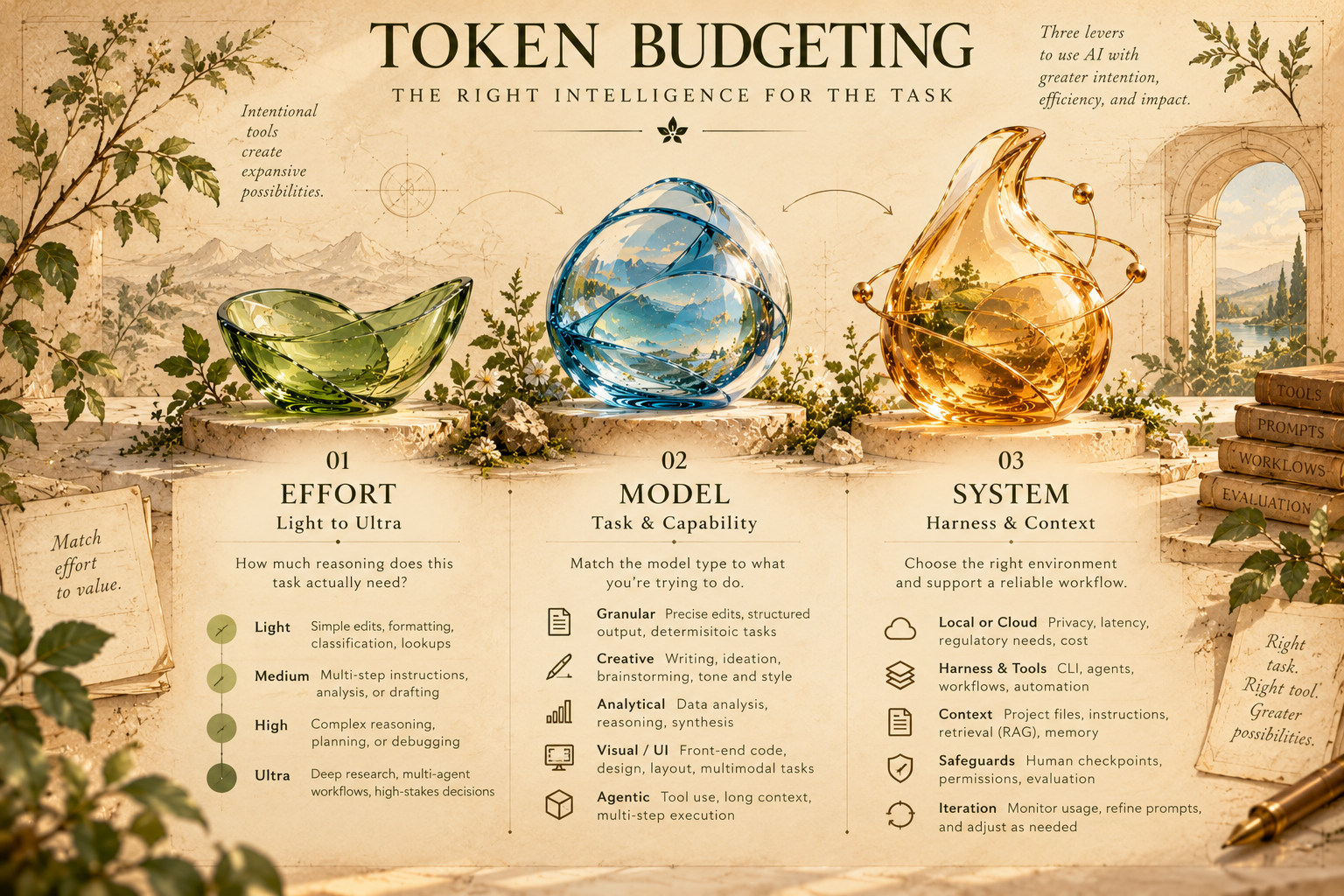
“Tokenmaxxing” can make consumption sound like achievement. But more output, more agents, or a longer reasoning pass does not automatically create more value. A better goal is to spend effort where it changes the answer.
For a small, reversible edit—rename a label, adjust a color, summarize a short note—use a direct instruction and a lighter capable model. For ambiguous work, multi-step analysis, or code that affects other parts of a system, give the model more context and stronger reasoning. Model names and capabilities change, so test the actual task rather than relying on a permanent ranking.
Keep context purposeful. Include the relevant files, constraints, and desired result; leave out unrelated history. Ask for a bounded deliverable, check it, and continue only where the first pass reveals a real gap. A narrow follow-up is often more useful than restarting with a giant prompt.
A tiny routing check
Is the task clear and easy to undo? Use a fast, capable path. Does it require synthesis, careful tradeoffs, or changes across a codebase? Allocate more reasoning and review. Does it involve high stakes or sensitive information? Decide the data boundary before choosing a model.
Token counts alone cannot tell you a request’s full energy footprint. They can still help teams notice waste, compare workflows, and ask providers for clearer reporting. Mindful use is good hygiene—not a substitute for responsible infrastructure.