Sustainable AI
AI has a physical footprint. Stewardship means asking better questions of both our own workflows and the systems that provide them.
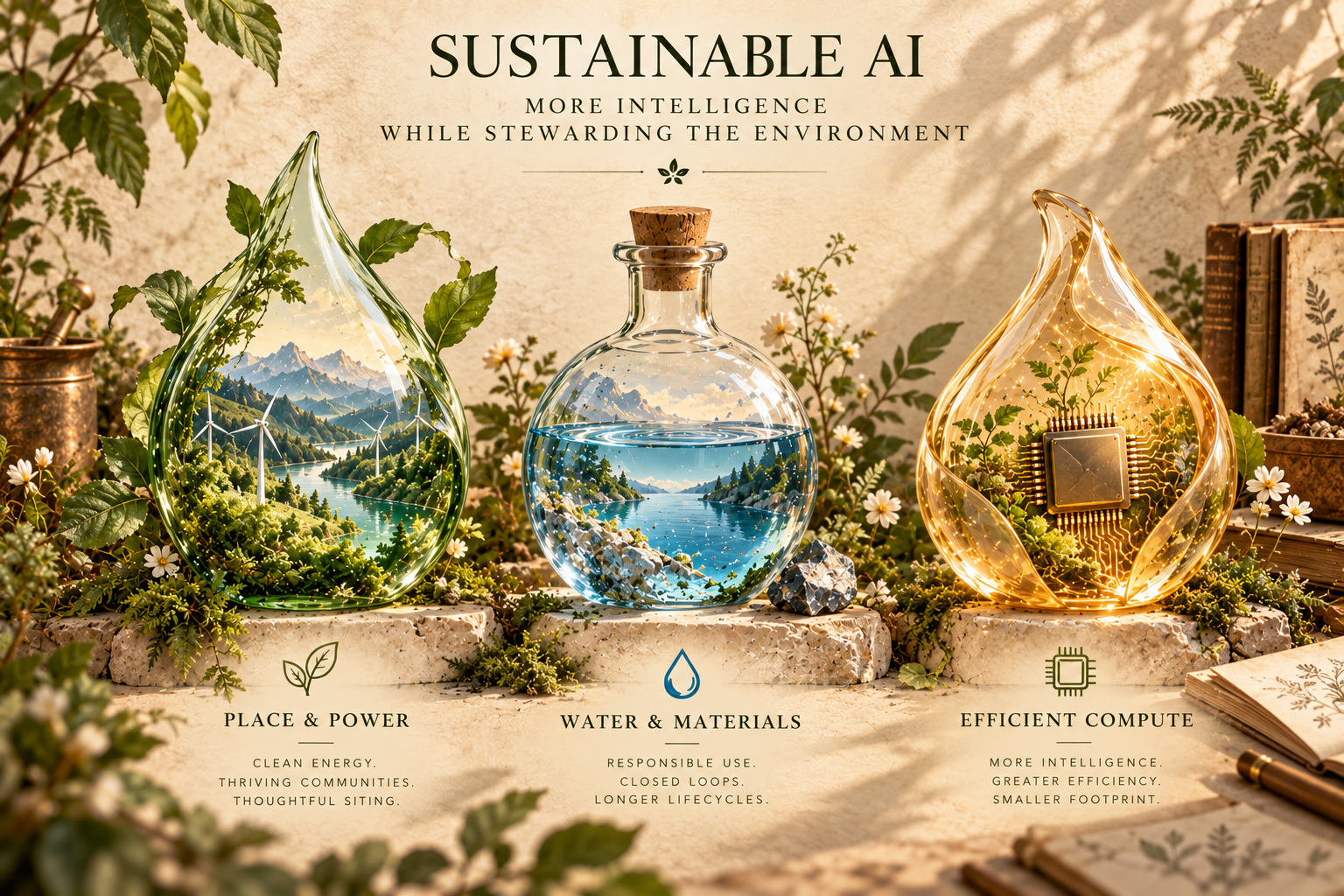
Every digital service depends on physical infrastructure: chips, data centers, networks, cooling, and electricity. The details vary by model, provider, location, and workload, so a token count by itself is not a reliable measure of impact.
That uncertainty is a reason for better measurement and transparency, not a reason to pretend the footprint is zero—or to place the entire burden on individual users. Providers make major infrastructure choices. Product teams and users can still avoid wasteful patterns: repeated generations with no decision attached, oversized context, or elaborate automation for a simple task.
A practical approach is to define the outcome first, choose a proportionate workflow, reuse validated work, and stop when the job is done. For organizations, responsible procurement also means asking providers about energy sourcing, water use, efficiency, and how impacts are measured.
Questions worth keeping open
What work is this computation doing? Would a simpler method be enough? Can we measure the system’s impact instead of guessing from tokens? What information should providers make available to customers?
Good stewardship combines individual judgment with institutional accountability.
Further reading: IEA, Key Questions on Energy and AI.